Tips for Scouting for Thrips in Pepper
When insects damage crops, it can make it easier for virus and disease to infect the plant. Scout early and often to help control insects.
Pepper growers dread seeing tiny but deadly black thrips hiding in a previously healthy plant’s flowers. They know the damage that can be wrought by black thrips, or Thrips parvispinus (TP), and how quickly this invasive pest can spread.
This pest has been known as a threat for a few years but this season it’s spreading rapidly across key agricultural regions. It causes significant yield loss and disrupts the food chain. In Spain, home to vast hectares of greenhouse-grown peppers, farmers are calling it a “plague” and some are getting out of pepper-growing altogether.
How to Scout for Thrips parvispinus
Early detection is crucial.
- Check the flowers: Black thrips are often hidden in flowers. A light tap on the flower can reveal an assembly of thrips that fall out.
- Use sticky traps: Thrips are attracted to yellow or blue sticky traps. Inspecting these traps regularly can confirm the pest’s presence.
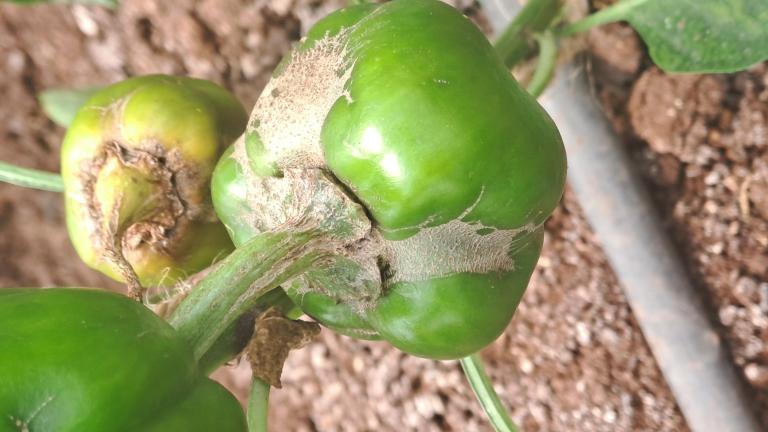
- Look for feeding damage: Inspect leaves and fruits for typical symptoms.
- Greenhouse hygiene: Good greenhouse hygiene, including sticky traps, can help manage populations.
What is Thrips parvispinus?
Damage is caused by both nymphs and adults, which puncture plant cells to suck out the sap. They cause devastating symptoms, including silvering, bronzing, scarring, and deformation of leaves and fruits. Damaged fruits lose their market value, and in severe infestations, flower drop and fruit abortion can occur.
Which Regions are at Risk of Thrips parvispinus?
A prime example is Spain, which has two large areas producing peppers in protected environments:
• Almería- producing Fall-winter peppers from September-April. Greenhouses are very concentrated and the pest spreads easily.
• Campo de Cartagena- producing spring crops from April-August.