Watermelon Rootstock Provides Disease Management Options
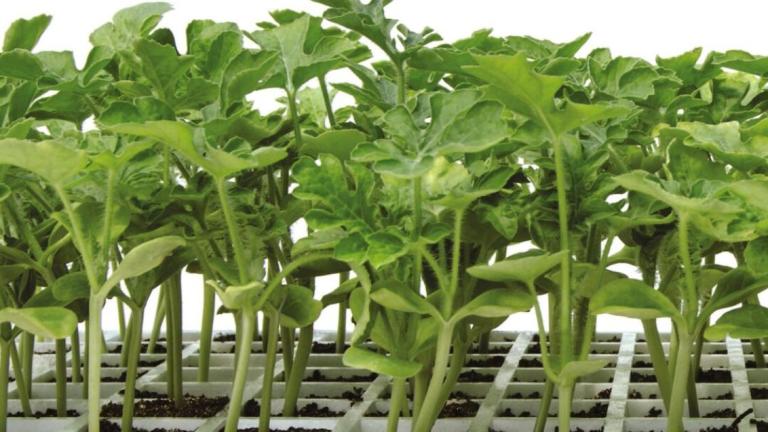
If you’re a watermelon producer, you know the headaches of land becoming scarcer and disease pressure, especially with Fusarium wilt Race 2 on the rise.
When Fusarium takes hold, it’s devastating; it’s the kind of disease that can leave you with a “hot field” and a total loss. Traditional field rotation of seven years simply doesn’t work when land is tight, and competition for acreage is high.
Many growers are finding they can get back to using their land more quickly by switching to grafting. By using a watermelon rootstock with disease resistance, they are turning a survival tactic into a competitive advantage.
Grafting has become an essential tool, with grafted acres increasing substantially across the United States in the past decade.
Scarce Land and Hot Fields
Watermelon demand is strong in the United States, bringing great opportunities. However, Fusarium is an increasing challenge, especially in the southeast and Florida - the leading production area - but also increasingly in the West.
“We’re seeing a lot of vegetable production land going into housing, data centers or solar panels,” said Rebecca Wente-Naylor, Cucurbits Product Specialist for the eastern U.S. “Traditionally, growers waited seven years before rotating back to watermelons to keep soil-borne diseases at bay. With less land available, those rotations are getting tighter.”
Once the fungus takes hold, the plant wilts away, unable to take in water or nutrients. It has a hallmark look: you might see one half of a plant stay green while the other half completely collapses. If you slice into the crown, you’ll see the vascular tissue has turned a tell-tale brown. In these “hot fields,” Fusarium can cause losses up to 100% of a crop.
“Fusarium stays within the soil and it’s impossible to truly ‘clean’ the land,” added Skyler Zapata, Syngenta Vegetable Seeds Cucurbits Product Specialist for the western U.S. “Growers have to prevent the pathogen from getting a hold in the first place, and grafting a resistant watermelon rootstock is the best way to give that land back to the grower.”
Why Watermelon Rootstock Beats Squash
The choice of rootstock determines how successful that graft will be. Traditionally, squash rootstock was the go-to because it grows aggressively. However, squash rootstocks can have some drawbacks – it can cause the vines to grow very vigorously, fruit to become larger, the fruit texture to become firmer, and even give the watermelon a “squashy-flavored” aftertaste.
“Repeat sales are what drive value,” Wente-Naylor noted. “If a consumer eats a watermelon and they don’t like the texture or flavor, they won't buy another one for weeks.”
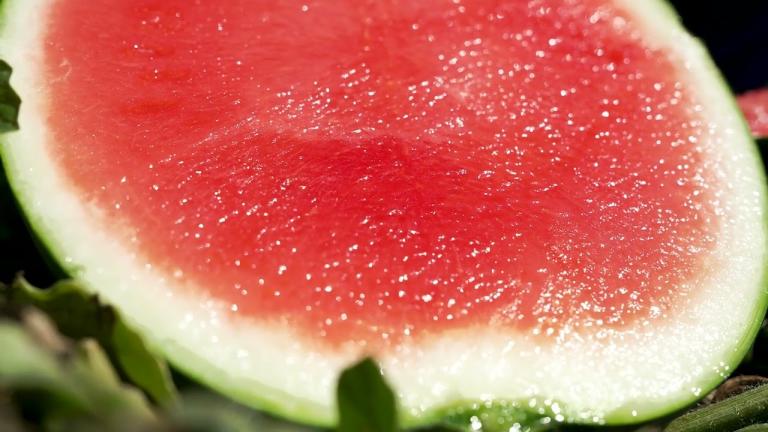
Carolina Strongback overcomes those issues. Because it is a watermelon-on-watermelon graft, it preserves the light, crunchy texture and high sugar content consumers expect. It provides resistance to Fusarium wilt Race 1 and Race 2, as well as root-knot nematodes.
There are also significant management benefits:
Pest control: Unlike squash rootstock, which actually attracts squash bugs because the insects can smell the squash compounds in the air, Carolina Strongback doesn’t draw them in. This can help reduce the need for extra insecticide applications.
Marketable sizing: While squash can make fruit too large for modern retail, Carolina Strongback provides a moderate increase.
Fresh-cut quality: The moderately improved firmness helps the fruit performs better in the high-value cup fruit or clamshell market, holding its shape.
Playing this video requires a marketing consent.
Click anywhere on the video to renew your consents.
Leading the “Evolutionary Arms Race”
Pathogens continue to evolve, with new races of Fusarium wilt always a threat. Syngenta anticipates this through a comprehensive trialing program. “It is an evolutionary arms race,” says Rebecca. “As the pathogens change, we have to change. We test all new watermelon varieties under grafted conditions using Carolina Strongback, so we can be sure growers receive varieties with known performance when grafted.”
Syngenta’s passion for the crop runs deep. “Syngenta has a very, very strong focus on watermelon; it’s a huge priority for us,” said Zapata. “We see how passionate both growers and consumers are... the watermelon culture in the United States is very strong and it will always be a major focus for us.”
Global Reach
Carolina Strongback is available across the United States and extends to international markets including Central America and Australia, helping growers worldwide protect their yields and their legacies.
© 2026 Syngenta. Some or all of the varieties may be protected under one or more of the following: Plant Variety Protection, United States Plant Patents and/or Utility Patents and may not be propagated or reproduced without authorization.
The trademarks or service marks displayed or otherwise used herein are the property of a Syngenta Group Company.
All photos are either the property of Syngenta or are used with permission.