Syngenta Vegetable Seeds Brings Onion to North America
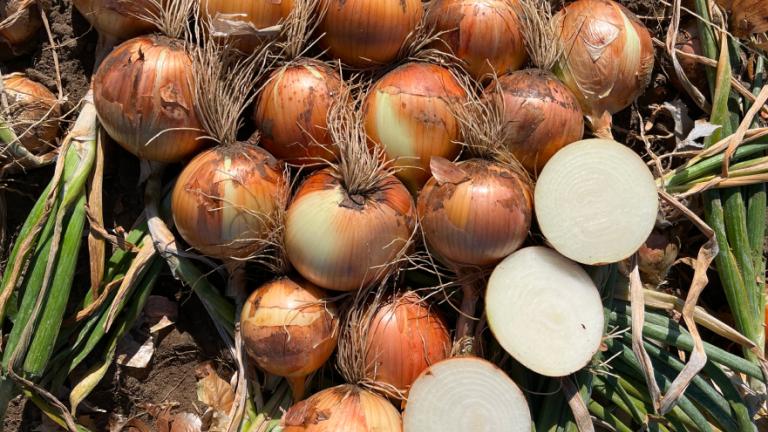
Syngenta Vegetable Seeds is bringing two new long-day onion varieties to growers in North America: Roundo, an early-season yellow onion, and Olympo, a main-season white onion.
These additions to Syngenta’s onion portfolio are bred to help growers achieve consistent bulb quality, strong single-center percentages, and reliable bolting tolerance across diverse growing conditions.
Built around the needs of growers and the markets they serve, Roundo and Olympo combine agronomic performance with the quality characteristics required at harvest and packout.
Roundo is an early-season, long-day yellow onion bred for reliability and adaptability across diverse growing regions. With an average maturity of 105 days, Roundo produces premium, globe-shaped bulbs in a colossal size, supported by excellent skin quality and a high percentage of single centers.
Its strong agronomic package includes low bolting tolerance, even under challenging growing conditions. Broad adaptability across growing areas in the western United States gives growers confidence in consistent performance across varying field conditions. Roundo is suited to both fresh-market and processing segments.
Olympo is a main-season, long-day white onion developed to deliver the appearance and consistency demanded by fresh-market buyers. Maturing at 125 days, Olympo produces globe-shaped, jumbo-sized bulbs with exceptional skin quality and thin necks.
The high percentage of single centers and reliable bolting tolerance support consistent crop performance and packout quality. These characteristics can help growers maximize marketable yield from planting through harvest and packout.
Grower Feedback Drives Innovation
Every innovation in vegetable seeds starts in the field with customers. As our onion breeding program expands, collaboration with growers remains central to how new varieties are developed, tested, and refined.
“Grower feedback is absolutely essential,” says David Whitwood, Onion Breeder at Syngenta Vegetable Seeds. “The best opportunity for grower success is listening to the grower, pulling in their current requests and needs, and then putting that together with the germplasm we currently have to develop the best product.”
Disease resistance is also an important part of the breeding process. Syngenta’s onion breeding program takes a global approach to resistance, addressing challenges such as downy mildew, Fusarium, and powdery mildew that can affect yield and crop quality across growing regions.
“The most important qualities that we breed for in onions are shape uniformity, and we’re also breeding for single centers and storability,” says Miguel Guillén, Product Specialist for the western United States at Syngenta Vegetable Seeds. “It’s a careful balance between agronomic traits and consumer traits.”
Innovation with a Global Perspective
Building a portfolio that performs across diverse growing regions requires more than local observation. Syngenta’s onion breeding program draws on germplasm from around the world and tests varieties across a broad range of environments. This approach helps ensure that products are refined for both agronomic performance and marketable quality.
“We are building our portfolio to expand in all colors for the short-day, intermediate-day, and long-day segments,” says Guillén.
The global-to-local approach shapes how each variety is developed. Products are tested in different environments to help breeders predict performance, refine key characteristics, and deliver varieties that meet growers’ needs in the field.
“What’s significant about our onion breeding program is that we are pulling in germplasm from around the world to pull together the best product for the local consumer,” says Whitwood.
With Roundo and Olympo, Syngenta Vegetable Seeds continues to expand its onion portfolio with varieties designed to support dependable field performance, consistent quality, and the needs of growers and markets.