ToBRFV-Resistant Rootstock Shows 50% More Root Mass than Susceptible Types
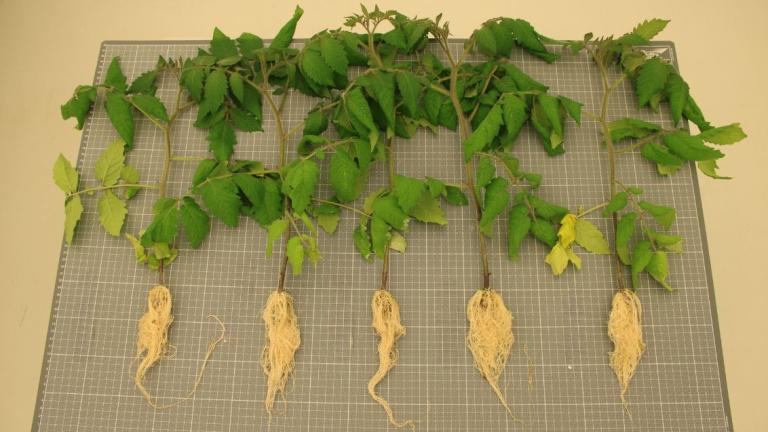
Rootstock, paired with strong scion, gives growers the opportunity to extend their crop cycles and combine the best soil disease resistances with the best plant resistances. When it comes to Tomato Brown Rugose Fruit Virus (ToBRFV), the need for protection from root to fruit is paramount.
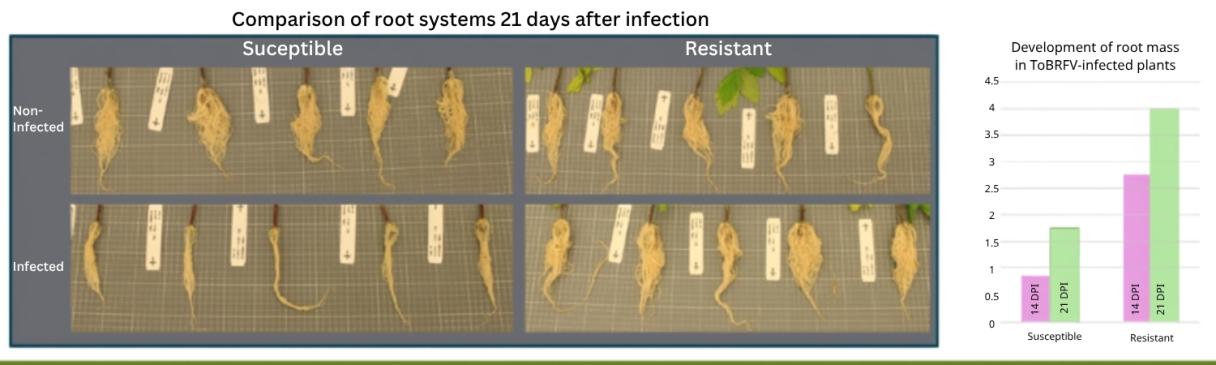
In a recent study* by Syngenta Vegetable Seeds, researchers examined the impact of ToBRFV-resistant rootstock on root weight in tomatoes. The study shows that resistant rootstock in a grafting program helps protect root mass.
ToBRFV Resistant Rootstock Protects Plants from Soil-Borne Infections
The study aimed to show the value a ToBRFV resistant rootstock can bring in a grafting program. By comparing root weights of young plants at 7, 14, and 21 days post-inoculation, the team discovered clear differences in susceptible versus resistant rootstock.
Syngenta’s two independent studies showed that ToBRFV infections impact not only the vegetation and fruit, but root mass as well. Roots are responsible for water and nutrient uptake and can impact the plant’s ability to withstand abiotic and biotic stresses.
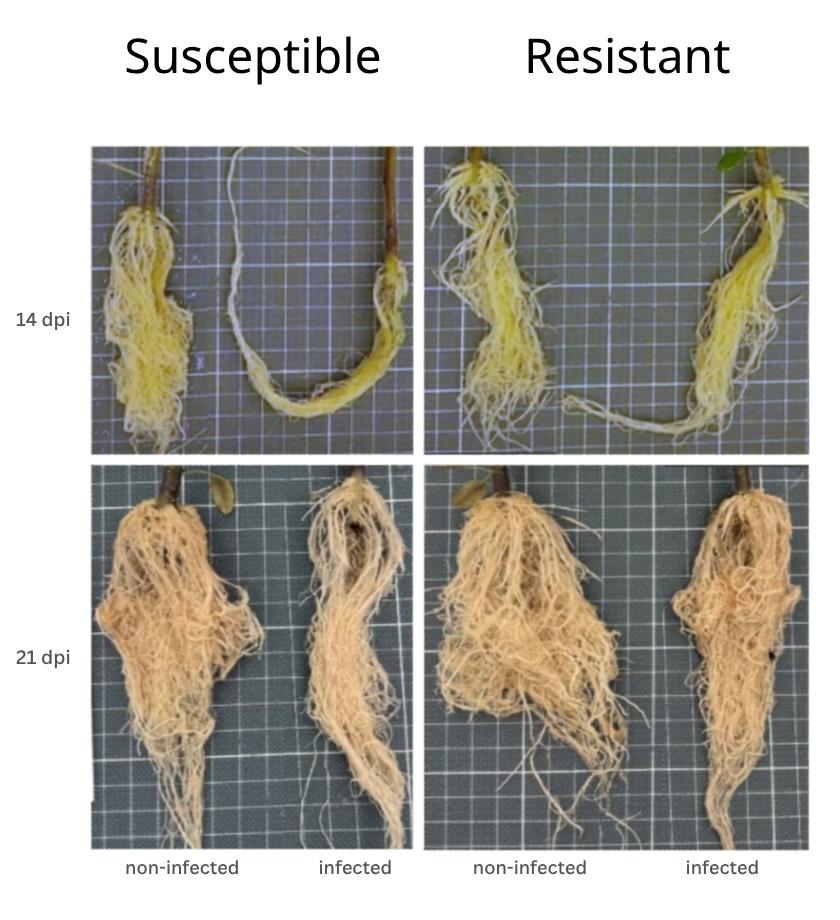
“Susceptible plants showed more than 50% less root mass compared to our resistant rootstocks 21 days post-infection,” said Peter Schleicher, Syngenta Vegetable Seeds Breeder for Passive Greenhouse, Solanaceae. “The resistance Syngenta is deploying avoids this negative effect of a rugose infection on root growth.”
Additional Independent Study Shows ToBRFV Resistant Rootstock Brings Value
In another recent study** published in Frontiers in Plant Science, researchers concluded that “grafting on resistant rootstocks provides a barrier against soil-mediated transmission but does not confer immunity to foliar-inoculated infections,” for ToBRFV.
Furthermore, this study that screened nearly 100 tomato varieties showed, “Resistant rootstocks mitigate economic damage by lowering fruit symptoms and potentially inducing systemic defense responses though grafting transmissible signals reaching mostly the first fruit cluster.”
When resistant rootstock was combined with resistant scion, it showed just a 16.43% infection rate, compared to 92% infection rate in the susceptible controls.
To learn more about Syngenta’s ToBRFV resistant rootstock and resistant scion options, click here or contact your local Syngenta representative.
Note, Syngenta rootstocks are classifed IR.
*Syngenta Vegetable Seeds Tomato Rootstock ToBRFV Resistance Study; Vitiello, A, Schleicher, P; January 2026-April 2026; Enkhuizen, Netherlands
**Rochsar E, Smith E, Bandel K, Klap C, Bakelman E, Koren A, Zamir D and Dombrovsky A (2026)
Breeding Tm-1-based tomato rootstocks, resistant to tomato brown rugose fruit virus, to impede soil-mediated viral infections.
Front. Plant Sci. 17:1815342.doi: 10.3389/fpls.2026.1815342