Discover Syngenta Peppers Aug. 13-15 in Woodland, Calif.
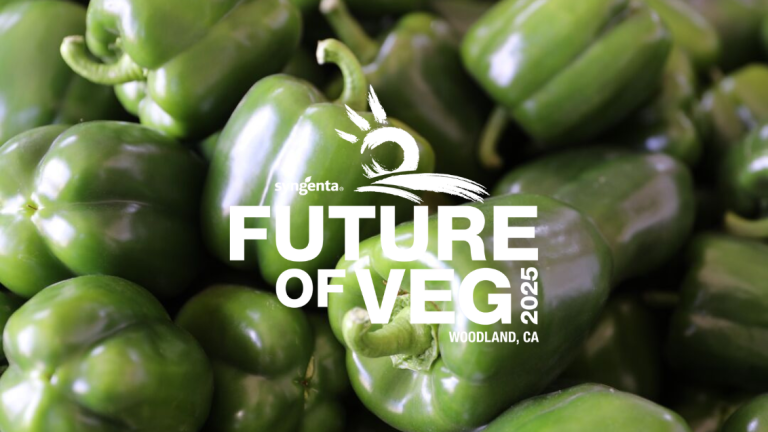
Whether they’re hot or sweet, peppers provide a flavorful addition to any dish – and consumers are asking for more. At Syngenta Vegetable Seeds, we bring new solutions to growers in blocky and hot pepper varieties with a focus on continuous improvement to these portfolios through customer feedback.
“Sales teams go out and talk to the growers in their locations and find out what’s happening,” said Adrain Castro, Syngenta Vegetable Seeds Product Specialist Solanaceae Open Field, Mexico. “This means we can pay close attention to farmers’ needs and understand their challenges and then relay information to breeders at the Syngenta R&D facilities.”
Peppers are an important crop in the Americas and growers need solutions that help them grow high quality, high yield potential crops. At Syngenta Vegetable Seeds, we’re proud to offer great varieties today and focus on continuing to bring solutions for the challenges of tomorrow for sweet peppers and hot peppers alike.
Learn more about hot and blocky peppers today!
Blocky Peppers Bred for Disease Resistance and Quality
Blocky – bell – peppers are grown and consumed around the world. They’re versatile and can grow in many colors. For the U.S. and Mexico, breeders continue looking for solutions that protect this fruit yield potential and quality against damaging diseases.
“For the western part of the U.S. we have resistance against key diseases such as the tomato wilt virus,” said Miguel Guillen, Product Specialist, U.S. West. “It’s a nasty disease vectored by thrips, which can be difficult to control, and results stunted plant growth, necrosis of the leaves, and ringspots in the fruit. The damage caused by TSWV results in a loss for the grower.”
Apart from agronomic defenses, we’re also focused on creating the right size and shaped blocky pepper to meet retailer and consumer expectations.
"We want a cookie cutter pepper,” Guillen said. “We are always looking for the adequate size for the market, good shape uniformity, and a nice dark green color for green bell peppers and even for the reds and yellows you want a beautiful color that stands out.”
With breeding centers around the world, including a recently expanded facility in Spain, researchers are continuing to build the genetic solutions that help support growers. Through localized trialing, products can be used anywhere around the world where they are adapted, regardless of the breeding location.
Checkout the newest varieties and get more information from our researchers at the Future of Veg event in Woodland, Calif. Aug. 13-15, 2025.
Discover Mexico’s Finest Jalapeño and Ancho Hot Peppers
Hot peppers are grown year-round in open fields. In Mexico’s vast expanse, while some states are planting, others are harvesting. Growers cultivate a wide variety of hot peppers and operate in very different weather and growing conditions across the states.
“Today Syngenta hot pepper products offer the characteristics that growers value,” Castro said. “They are highly versatile in different locations and conditions, and we are continually improving varieties to be resilient to changing threats. We have products with resistance, and plan to continue to find new and better resistances, for example against bacterial leaf spot and soil wilt.”
Discover some of Mexico’s newest varieties and how they could fit into programs in the U.S. and beyond:
Mexica, a heavy, bullet-type green jalapeño up to 5.5 inches long, highly adaptable to different production areas for both domestic and export markets.
Tlapaneco, a new conical jalapeño designed for arid, hot regions like Sonora and Coahuila. Tlapaneco exhibits excellent size and uniformity, and its plant structure helps prevent sun-damaged fruits.
Silex, ancho pepper with resistance to specific bacteria BLS 1-3), Tm:0, TSWV. Known for its precocity and heat setting and is ideal for short-cycle areas with 2 to 3 harvests.
Purépecha with high resistance to soil wilt as well as excellent fruit quality and uniformity.
Jalapeño Chametla has excellent fruit quality and uniformity.
Obsidiana, ancho, is known for its vigor and strength, helping protect yield potential against disease and climate stresses, and for its appearance.
All Syngenta varieties possess excellent heat setting (development of pungency level), and are resistant to major bacteria, soil wilt (phytophthora), and other pathogens. Bacterial leaf spot and soil wilt are currently high risks. Syngenta is constantly developing its pipeline of new products and will maintain a close dialogue with customers to ensure its pipeline effectively tackles future challenges.
Register today to see these peppers in action in Woodland!
© 2025 Syngenta. Some or all of the varieties may be protected under one or more of the following: Plant Variety Protection, United States Plant Patents and/or Utility Patents and may not be propagated or reproduced without authorization. The Syngenta logo is a trademark of a Syngenta Group Company.