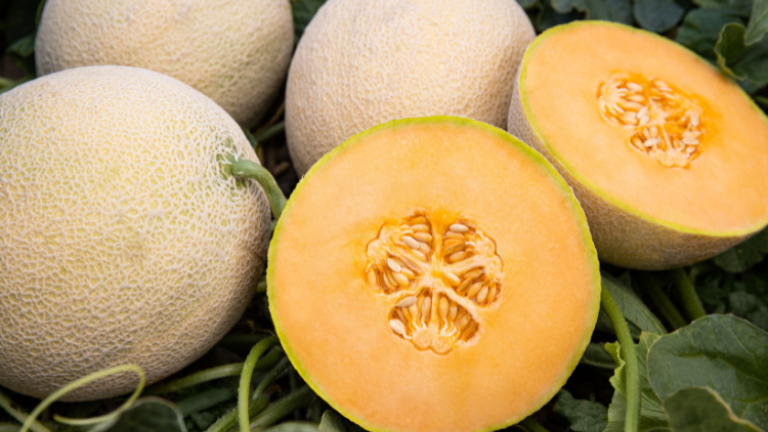
Innovating for Watermelon Quality and Yield Potential
Join Future of Veg in Woodland, Calif. and Learn About Disease-Resistant, High-Quality Watermelon for Global Consumption
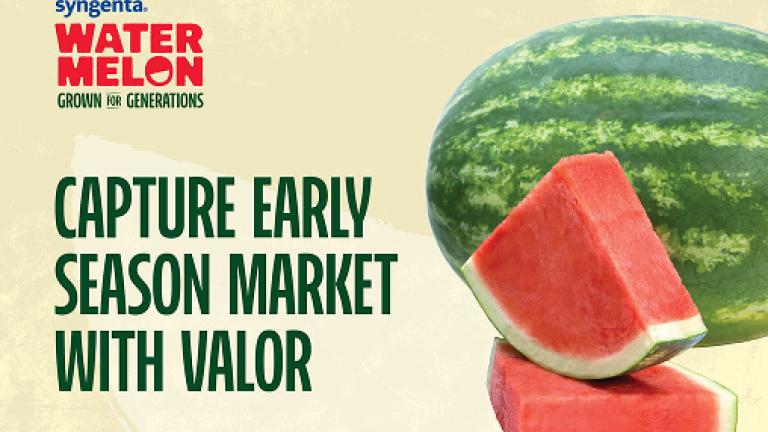
As the days get hotter, one crowd favorite is a cold, crunchy slice — or three — of watermelon. And when it comes to watermelons, Syngenta Vegetable Seeds sets a high standard for quality. This includes a portfolio standard Brix score of 10 or higher, excellent firmness, and high yield potential.
This year, watermelon growers from around the world have the opportunity to see the newest varieties – live in fields in Woodland, Calif. Aug. 13-15. Discover how Syngenta is addressing the biggest challenges in watermelon to bring the best solutions to growers.
Syngenta Vegetable Seeds offers disease- and infection-resistant varieties and rootstock options to ensure plants’ health and productivity. Also discover firm flesh varieties that are dual-purpose for both packaged and whole-fruit markets.
Quality and Disease Resistance
The standard disease package at Syngenta Vegetable Seeds includes fusarium race 1 (Fon:1) and anthracnose race 1 (Co:1). Some include powdery mildew and zucchini yellow mosaic infection resistance, which is above and beyond the typical disease package.
“While we’re proud to maintain rind expectations and overall quality, we are always keeping an eye on the diseases that matter the most,” said Skyler Zapata, Syngenta Vegetable Seeds Cucurbits Product Specialist for U.S. West. “One of the pieces that we will forever be working on is adding new disease packages to improve both plant health and yield.”
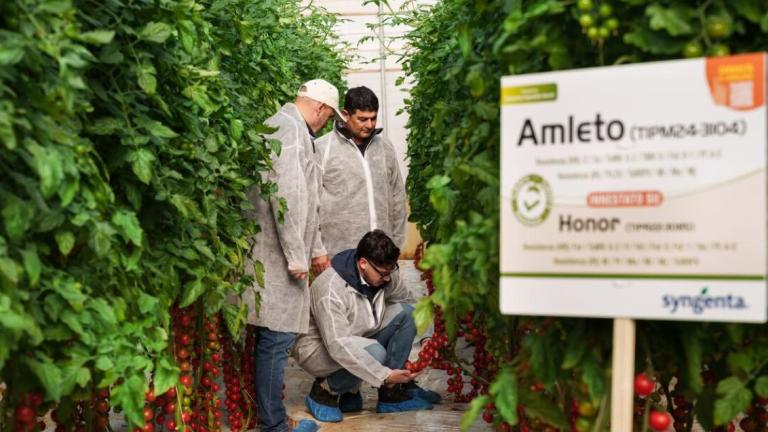
Syngenta researchers and breeders are always researching new and evolving diseases to create the most effective resistance. See what researchers are working on in fields for a sneak peek at what’s to come in disease resistances.
Firm Flesh Watermelons
Firm flesh watermelons are one of the ways Syngenta Vegetable Seeds is responding to grower feedback requesting dual-purpose watermelons. Typically, watermelons are either grouped into packaged or whole-fruit markets, but these varieties can be used for either. Both can withstand cutting and packaging remarkably well and ship and store for whole-fruit sale also.

Cato, a red seedless 82-day watermelon, has a firmer flesh than most melons so it can be used for both fresh-cut and whole fruit markets. It also has robust disease resistance for both Fon:1 and Co:1.
Golden Crisp is similar in that it’s a firm flesh, seedless, dual-purpose melon — but it’s a completely different color. The yellow flesh is a unique, niche offering for growers and consumers.
“Golden crisp is a really excellent variety, and it has a very distinct rind pattern,” Zapata said. “So, if you plant a field of golden crisp next to a red variety, you’re not going to accidentally mix bins.” Golden Crisp has intermediate resistance to both Fon:1 and Co:1.
Watermelon Rootstock
One tried-and-true method to increase disease resistance in watermelon is to use rootstock. This process involves grafting the scion, or variety that will be the top — and fruit producer — of the plant to a rootstock of a different variety of plant.
The watermelon rootstock Syngenta is working with — Carolina strongback — is one of few watermelon root stocks in the market. This rootstock provides advanced disease resistance via its roots — and can be grafted to any scion within the Syngenta portfolio.
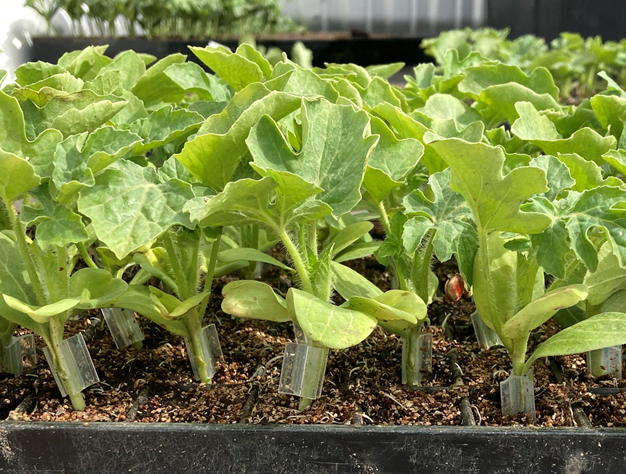
“Rootstocks provide great resistance to certain diseases, especially those that impact the roots first,” Zapata said. “It gives growers a strong start for a great season.”
Super shintosa, a squash rootstock, has shown excellent results in watermelon grafting, creating a bigger and stronger plant.
“With grafted watermelon the grower will have stronger plants, improve firmness in the fruit, and notably gain resistance to soilborne diseases such as Fusarium,” said Luis Angulo, Syngenta Vegetable Seeds Cucurbits Product Specialist, Mexico. “Using grafting can be the difference between being able to grow watermelon in certain soil conditions or not.”
Unsure whether the Carolina strongback or Super shintosa is right for you? Work with your local Syngenta representative to find the best rootstock and plant scion combination for your needs.
See What’s New For Yourself
Want to know more about advanced disease resistance, firm flesh watermelons and rootstocks? Check out Syngenta’s Future of Veg field event in Woodland, California on August 13 and 14. Our watermelon breeders will be on-site to answer any questions you may have about our lineup.
© 2025 Syngenta. Some or all of the varieties may be protected under one or more of the following: Plant Variety Protection, United States Plant Patents and/or Utility Patents and may not be propagated or reproduced without authorization. The Syngenta logo is a trademark of a Syngenta Group Company.