"ToBRFV Resistant” Seal Signals Rugose Resistance in Australia and New Zealand
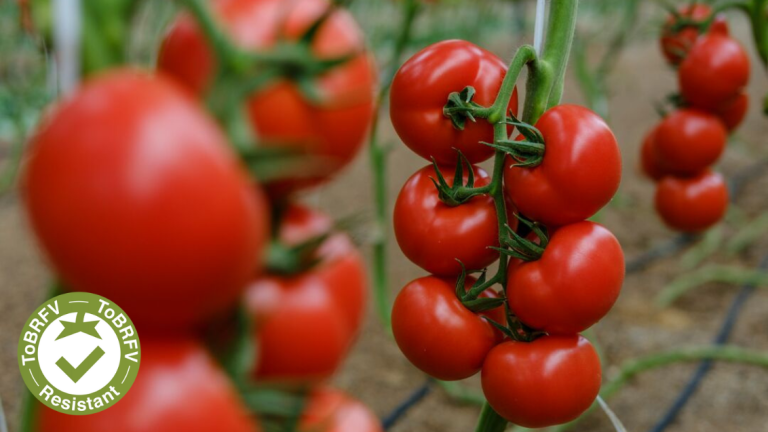
Syngenta Vegetable Seeds launched a “ToBRFV Resistant” seal in 2023 to indicate Tomato Brown Rugose Fruit Virus (ToBRFV) resistant varieties and now growers and nurseries will start seeing this seal down under!
The seal clearly marks our seed as ToBRFV resistant, but is also highly symbolic of the quality we strive to maintain, encompassing general disease resistance, without compromising fruit quality, flavour, shelf life, consistency or transportability. It also symbolises our ongoing research for ever-better resistance trait that improve production.
ToBRFV Resistance, Fruit Quality and Flavour
Disease resistance alone isn’t enough! Consumers have high expectations when it comes to flavour, and Syngenta is dedicated to protecting the flavour profiles consumers have come to know and love.
“As we continue to add new varieties to our lineup, we’re making sure they still taste great,” said Dion Potter, JAK Territory Brand and Customer Head.
“Consumers love the taste of our tomatoes and choose them when they go to the grocery store, so with the introductions of new resistant varieties we want to make sure that growers can continue to deliver what consumers expect.”
“Growers can lose up to 70% of their produce due to the virus”. Potter who has also been the ANZ Solanaceae Portfolio Manager for many years and who visits Europe yearly, further remarked “We’re constantly looking for solutions to ToBRFV without compromising resistance to other critical diseases.”
Syngenta researchers are looking for the whole package – ToBRFV resistance without compromising resistance to other diseases, fruit quality, and flavour. The ToBRFV Resistant seal tells growers they’re getting a full tomato package - whether it’s leaf curl, pepino virus, tomato spot virus, or simply concerns about fruit color and shelf life.
Continued Research for New Solutions Against ToBRFV
The researchers at Syngenta are taking the resistance we currently have on the market and in progressing it into new varieties and new kinds of tomatoes. As these experts continue researching new solutions, they’re committed to a stair-step approach to ToBRFV resistance, with each new mode of action discovered bringing a higher level of resistance than the last. The reason is simple: viruses evolve.
As researchers continue to seek new solutions, they’re committed to a stair-step approach to ToBRFV resistance. This means each new mode of action commercialized will bring a higher level of resistance than the last because viruses evolve.
“We know the virus is changing and it can cause a lot of damage, especially in yield, impacting the plant and changing its behavior,” said Dion Potter. “Viruses are unpredictable and hard to control. The path to market with new resistance traits can take many unexpected turns but our investment in this field enables us to move at pace, with quality and customer satisfaction being priorities.
“We have intermediate resistance and have had it for several years – since 2020. But we’re continuing to research many new varieties in the beef segments but also in mini cluster, saladette, beef cluster, and more,” he continued.
Discover our ToBRFV Information Center to Learn More Virus Mitigation Tips
Syngenta Australia has created a ToBRFV Resource Centre as a central location for information about new ToBRFV resistant varieties for Australia and New Zealand, details on the virus and where it has spread, and phytosanitary tips.
The ToBRFV Resource Centre provides helpful tips for reducing transmission risk, including a video and downloadable checklist and infographic.
Stay up to date with hygiene tips, new variety announcements, and more by signing up!
The information on this webpage reflects industry best practices and should not replace agronomic expert advice. This information alone should not be used to diagnose or treat any crop disease. Syngenta has exercised good faith and reasonable care in compiling this information. All information is intended for general guidance only and the user should apply it in accordance with its own knowledge and experience of local conditions. Reliance upon this information is at user’s sole risk and Syngenta expressly disclaims any and all liability in connection with this advice.
Syngenta hereby disclaims any liability for Third Party websites referenced herein.
© 2023 Syngenta. Trademarks are the property of their respective owners.