
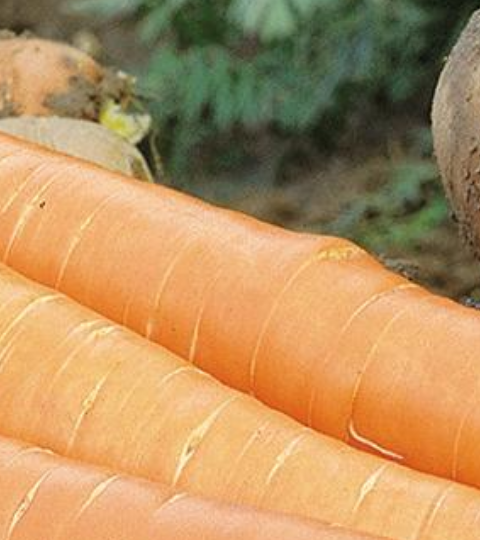
Carrots: Cultivating Resilience and Market Dominance in Zimbabwe
Syngenta leads the carrot category in Zimbabwe by offering a premier portfolio headlined by the Champion variety, renowned for its reliable yield and exceptional adaptability to wide climatic conditions. Our varieties are engineered to withstand the diverse environmental challenges of the region while delivering the uniform, high-quality roots demanded by both local markets and professional processors.

High Commercial Yield Potential

Adaptability Across Climatic Zones
Superior Root Quality & Uniformity
Syngenta Zimbabwe focuses on the traits that drive retail success: a deep orange internal and external color, smooth skin, and a perfect cylindrical shape. Our carrots are bred for strong foliage attachment, making them ideal for both hand-bundling and mechanical harvesting, while maintaining a sweet, crisp flavor profile.

Our Portfolio Promise: Balanced Excellence for Zimbabwe
Syngenta's carrot portfolio is engineered for the Zimbabwean market, balancing robust field resilience with the internal quality required for premium market positioning and consumer satisfaction.

Key Varieties, Traits & Benefits
Syngenta is committed to providing value from the field to the consumer's plate. Our carrot varieties for Zimbabwe maximize profitability with:
- High Yield Potential: Strong seedling vigor and uniform root expansion.
- Wide Adaptability: Proven performance in diverse soil types and climates.
- Disease Resilience: Strong resistance to foliar blights (like Alternaria) to maintain healthy tops.
- Excellent Shelf Life: Maintaining crunch and color long after harvest.
Growing Tips
For optimal results with Syngenta carrot seeds in the Zimbabwean climate, consider these tips:
- Soil Preparation: Carrots require deep, well-drained, sandy loam soils. Ensure the soil is free of stones and debris to prevent forking or misshapen roots. A pH of 5.8 to 6.5 is ideal.
- Planting: Sow seeds at a shallow depth (approx. 1 cm) in finely tilled soil. Consistent soil moisture is critical during the germination phase, which can take 10–14 days.
- Irrigation: Carrots need regular, even irrigation to prevent root cracking. Avoid alternating between extreme dry and wet conditions, especially as the roots reach maturity.
- Fertilization: Avoid excessive Nitrogen, which can lead to hairy roots or excessive foliage at the expense of root development. Focus on Potassium to enhance root color, sweetness, and storage life.
- Pest and Disease Management: Monitor for Carrot Fly and Nematodes. Maintain healthy foliage by managing Alternaria leaf blight, as strong tops are essential for successful harvesting and root energy production.