How Syngenta Produces Safe, Healthy Seed Supplies
Syngenta Vegetable Seeds products are grown around the world, which means it's vital to protect seed health to promote the sanitary global movement of seeds. With a multitude of crop species to test across a variety of global growing conditions, Syngenta Vegetable Seeds experts use high-tech testing to deliver quality seeds to growers, all while following various international standards.
Not every virus, bacteria or fungus found in a particular crop is present in every country where the crop is produced. Keeping those pathogens out of fields is important for all growers. Because of this, seeds are tested in a variety of ways.
“Our labs are accredited through third-party organisations to allow for the import and export of our seed,” said Laurel Carter, Global Head of Phytosanitary and Seed Movement Compliance at Syngenta. “That means we follow very specific protocol in our testing.”
Multiple Tests for Seed Health
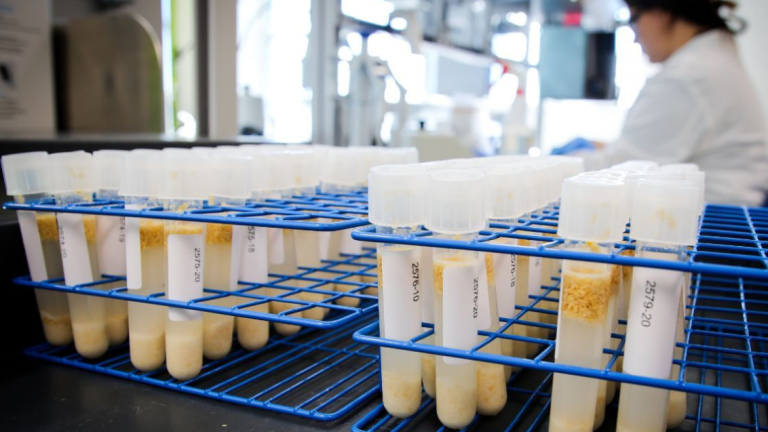
Seeds in Syngenta facilities undergo molecular testing using polymerase chain reaction (PCR) technology. PCR tests, which are often used in medical testing, can confirm the presence of DNA of seed-borne pests in just a day or two. If DNA is found, it could be alive or dead, so the seed lot moves into additional testing.
Other tests include protein testing. This test uses an enzyme-linked immunosorbent assay (ELISA), another process often used in medical testing. During this process, seed material is placed into a tray that keeps samples separated. The samples have a substance added to it to detect viral proteins by changing colors in a day or two.
Second check tests include testing seed samples by growing them for 20-to-30 days. These are called grow-out tests. Expert technicians observe seedlings for signs of viruses, fungi, or bacteria during this growing period. Any infected seed lots are destroyed.
These vital tests help keep foreign virus, bacteria and fungi are kept out of fields, meaning growers receive only healthy seeds. This practice helps keep safe movement of seed around the world at the forefront of priorities. And, thanks to technology, this testing is faster and more accurate than ever.
Laboratory Accreditation
Each country has its own certification agency and unique requirements for seed delivery. It’s a complex process that Syngenta Vegetable Seeds is dedicated to getting right.
For example, the Naktuinbouw Authorized laboratory, in the Netherlands, is a system that authorizes company laboratories to perform seed quality testing. The system ensures that your seed laboratory offers and maintains the required levels of reliability.
By using a Naktuinbouw Authorized laboratory, to inspect seed and plant material and test for diseases and pests, allows seed companies like Syngenta Vegetable Seeds to safely import and export seed.
The high-tech testing process at Syngenta Vegetable Seeds is the cornerstone of safeguarding the most important investment to growers: Seed. The meticulous dedication to seed health through testing is an important practice to ensure each seed has its best chance at success.
Syngenta Testing for Australia
Syngenta tests all tomato seeds exported to Australia at least twice for the presence of ToBRFV. The first test is to meet Syngenta internal quality standards and is performed by a Naktuinbouw Authorized laboratory. In addition, 20,000 seeds of each seed production supplied to Australia are tested again at a third-party laboratory using primers and protocols that are approved by the Australian Department of Agriculture, Fisheries and Forestry, to meet rigorous import requirements. Syngenta only supplies seed to Australia that tests negative for ToBRFV in both of these tests.
Stay up to date with hygiene tips, new variety announcements, and more by signing up to our ToBRFV resource centre.
The information on this webpage reflects industry best practices and should not replace agronomic expert advice. This information alone should not be used to diagnose or treat any crop disease. Syngenta has exercised good faith and reasonable care in compiling this information. All information is intended for general guidance only and the user should apply it in accordance with its own knowledge and experience of local conditions. Reliance upon this information is at user’s sole risk and Syngenta expressly disclaims any and all liability in connection with this advice.
Syngenta hereby disclaims any liability for Third Party websites referenced herein.
© 2023 Syngenta. Trademarks are the property of their respective owners